Magnum
Magnum held roughly two thirds of the impulse ice cream category in Turkey through Algida's distribution reach. Sales were strong. The reading of the market was not. Revenue was seasonal and reactive, and trends arrived in the numbers before anyone had a chance to act on them.
The brief was narrow and structural: plan and audit consumer research that could feed product innovation and the seasonal campaign calendar. Find what is coming before it shows up in the sales data.
The audit found three gaps in the research stack. Consumer tracking measured what sold last season, so nothing in the system captured emerging behaviour or shifting purchase triggers. The calendar followed a fixed summer peak cycle, which left autumn gifting and winter indulgence at home unmeasured and unplanned. And new products leaned on global flavour trends from headquarters, so Turkish dessert culture and regional flavour affinity never reached the product team in a form anyone could use.
Put simply, Magnum Türkiye had market dominance but no early warning system. It followed demand instead of shaping it.
Deliverables
Research audit
Trend sensing framework
Innovation recommendations
Seasonal calendar design
Data integrity and QA
Date
2009-2011
Client
The Magnum Ice Cream Company
Industry
FMCG
Research pointed at the signals that arrive before the sales figures do, then translated into product and seasonal decisions rather than left as findings in a deck.

The architecture. Three phases combined a data audit, a trend-sensing framework, and a permanent quality gate for reliable decisions.
Signal one, the small luxury shift. Rising incomes created demand for frequent, premium treats—an opportunity Magnum was not yet claiming.
Signal three, Turkish flavour identity tension. Consumers wanted Magnum’s premium ritual with local flavour cues, led by pistachio and Maraş-style texture.
From insight to action. Signals became actions: seasonal messaging, a multipack test, a locally rooted limited edition, and broader competition tracking.

Four research streams fed it. Ethnographic mapping, retail audits, cultural tracking, and a seasonal model brought early signals into one view.
Signal two, occasion migration. Multipacks were growing among urban 25–34-year-olds, revealing a home dessert occasion for the brand to address.
Signal four, competitive creep. Patisseries, artisan chocolate, and cafés were competing for the same premium-treat moment, widening the tracking frame.
The calendar changed shape. The calendar expanded from one summer peak to four occasions: spring, summer, Bayram gifting, and winter indulgence.


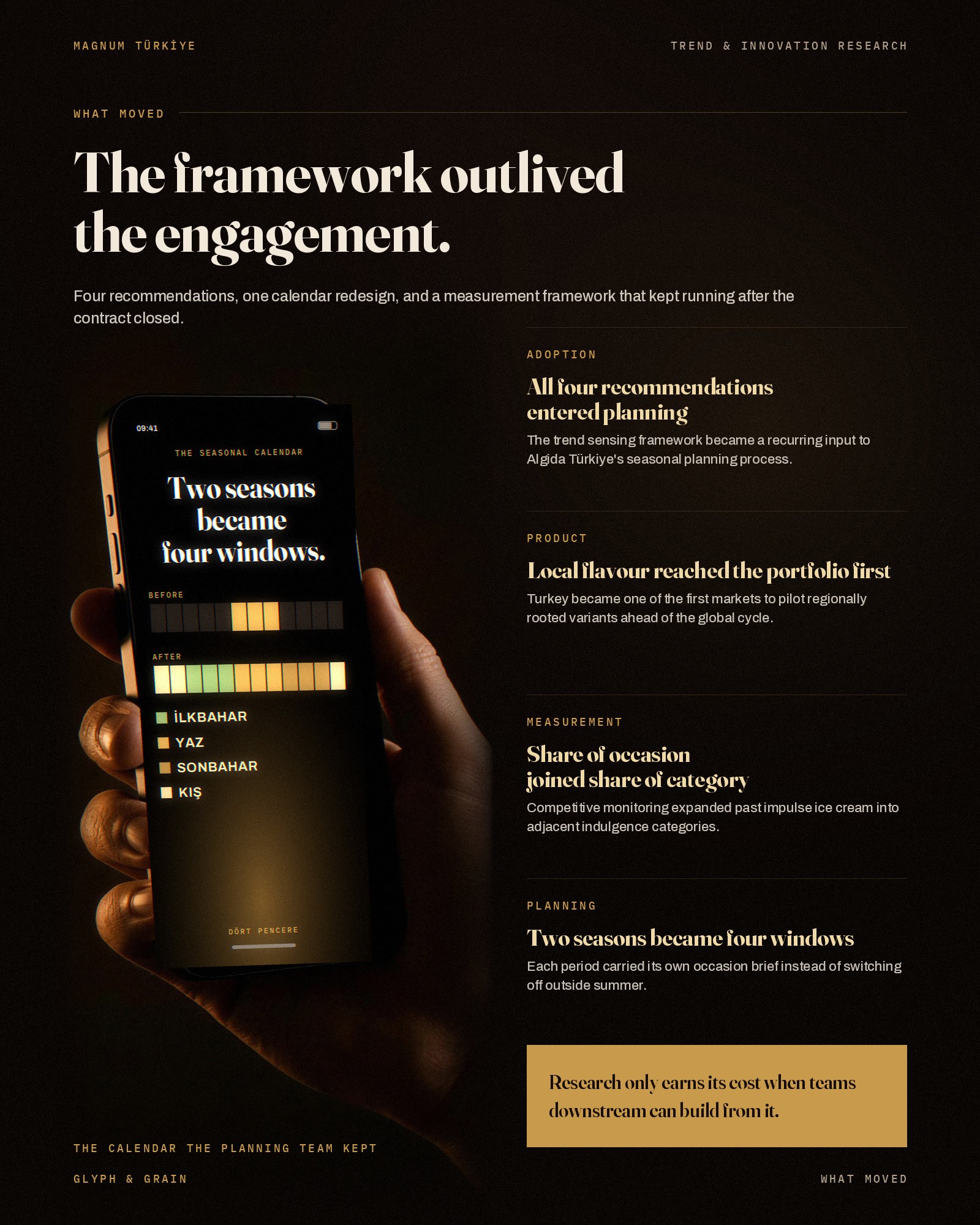
All four recommendations entered planning, and the trend sensing framework became a recurring input to Algida Türkiye's seasonal process rather than a one off study. Turkey became one of the first markets to pilot regionally rooted variants ahead of the global portfolio cycle. Competitive monitoring expanded past impulse ice cream into adjacent indulgence categories, with share of occasion joining share of category in the measurement framework. And the calendar stopped switching off in October.
The framework outlived the engagement, which is the only real test of research work. Figures are as reported at the time of the engagement.
The Magnum Ice Cream Company
Marketing Research Consultant, 2009 to 2011